Biocracked
←

#randomized controlled trial

1 article
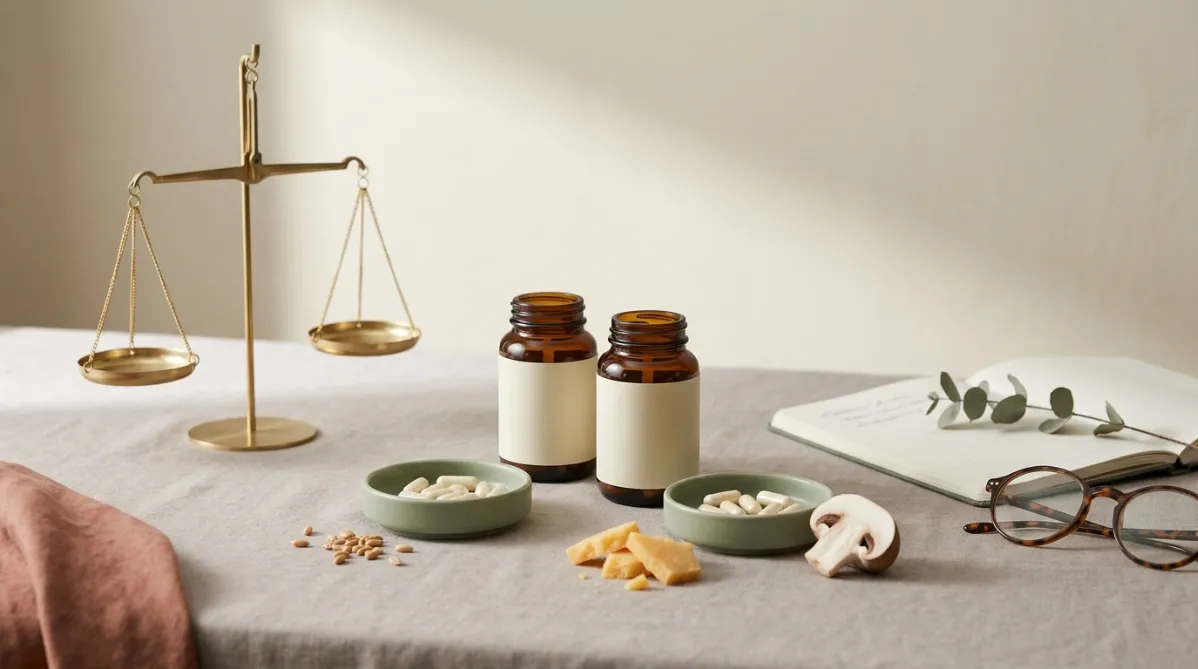
A wide, minimalist editorial still life on a soft, warm-gray linen surface lit by gentle diffused morning window light. At center sit two identical small amber glass supplement bottles, one slightly in front of the other, with plain matte cream labels and no readable text. In front of them, two matching shallow ceramic dishes in muted sage green hold identical small ivory capsules. The capsules are nearly indistinguishable, which quietly suggests placebo versus active. Beside the dishes, a few wheat germ grains, a small cluster of aged cheddar-toned cheese shards, and a halved ripe mushroom hint at natural spermidine food sources. They are arranged with careful negative space.

On the left, a delicate balance scale in brushed brass sits perfectly level, its two small pans empty and even, as a subtle visual metaphor for "no difference." On the right, a neat open notebook with soft blurred pencil lines and a single sprig of dried eucalyptus lies beside a pair of thin round tortoiseshell reading glasses, suggesting older adults and memory without showing any people.

The background is a softly blurred pale oat-colored wall with a long gentle shadow cast diagonally across the scene from a window. The color palette is muted and modern: warm cream, sage green, amber, soft brass, and dusty terracotta accents. Shallow depth of field keeps the bottles and scale crisp while the edges melt into a creamy blur. The mood is calm, thoughtful, and quietly skeptical, like a trendy health and science journal feature. Fine film grain, a subtle matte finish, and a balanced asymmetrical composition leave open space in the upper right for headline overlay. Photographed from a slightly elevated three-quarter angle, high-end editorial photography style.
supplements

Spermidyna dla pamięci? 12‑miesięczne badanie wśród 100 starszych osób nie wykazało przewagi nad placebo

BY DR. SYNAPSE ·

Spermidyna była reklamowana jako suplement chroniący mózg, bazując na badaniach autophagii i eksperymentach na zwierzętach. Badanie SmartAge poddało ją rygorystycznej próbie w grupie 100 osób starszych z subiektywnym pogorszeniem funkcji poznawczych, podając około 0,9 mg dziennie przez 12 miesięcy. Główny wynik dotyczący pamięci nie przewyższył placebo (różnica –0,03; p = 0,47), a wyniki wtórne również były nieistotne. Eksploracyjne wskazówki dotyczące zapalenia i pamięci werbalnej pozostają niepotwierdzone. Oto, co ten rezultat oznacza dla osób rozważających suplementację spermidyną i jakie są ograniczenia badania.

This page is available in